Searching for Queer History
LGBTQ Representation and National Memory Narratives in the Region of the Former Yugoslavia
DOI:
https://doi.org/10.17892/app.2025.00021.417Keywords:
Bosnia and Herzegovina, Croatia, Serbia, Slovenia, North Macedonia, queer, cinema, memory, traumaAbstract
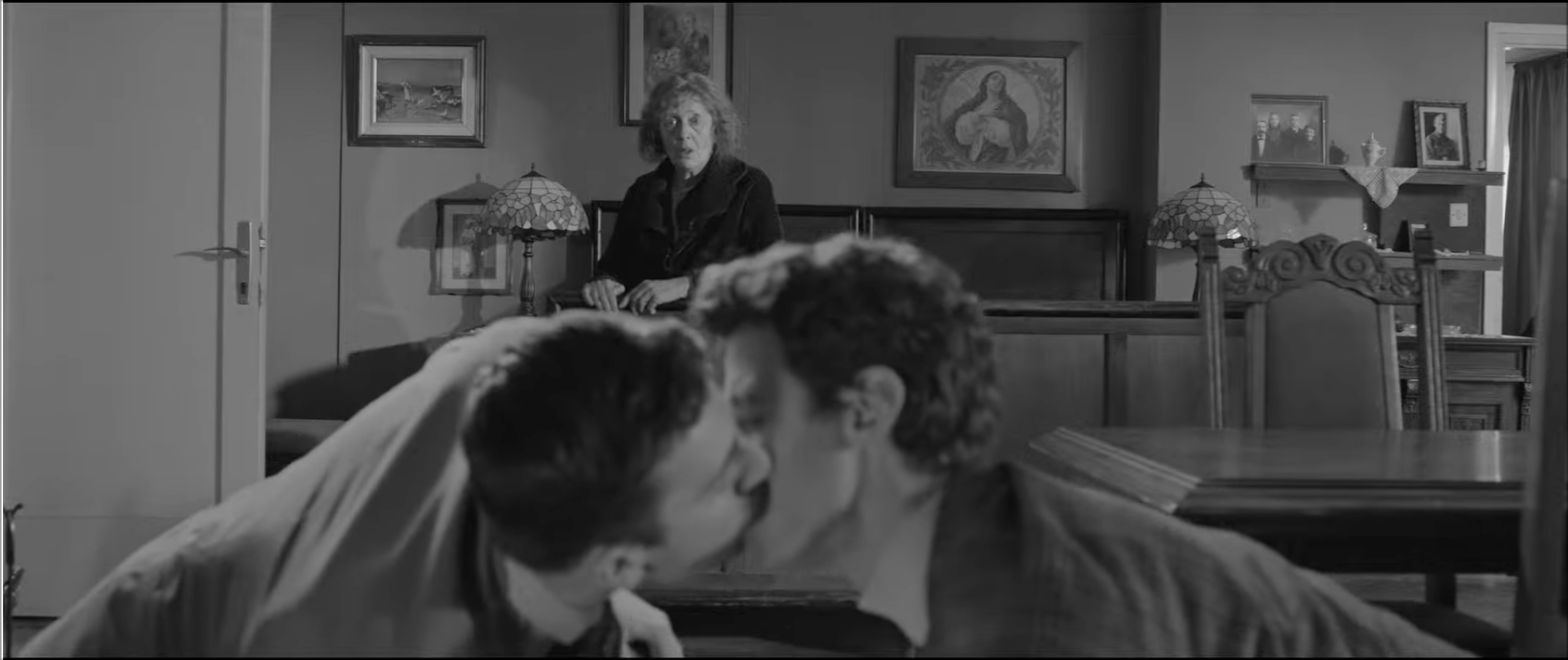
In 2024, Ivona Juka’s film Lijepa večer, lijepi dan / Beautiful Evening, Beautiful Day (2024, Croatia, Bosnia and Herzegovina, Poland, Canada and Cyprus) was unanimously chosen as Croatia’s submission for the Best International Feature Oscar. To many, this choice was surprising. On the one hand, the film became the topic of controversy surrounding its depiction of queer intimacy, with its explicit sex scenes contradicting the general lack of representation of queer sexuality in Croatian cinema. On the other hand, what made Beautiful Evening equally controversial was its choice of presenting both the history of the fascist Independent State of Croatia (1941-1945) and the socialist Yugoslavia through the perspective of its gay main characters, who are equated in the film with a drive towards liberty and against censorship, and are unequivocally presented as heroes. While the choice to approach national history through a focus on LGBTQ characters might at first glance appear surprising, this article sees Juka’s film as representative of a larger trend within queer cinema in the broader region of former Yugoslavia, where gay and lesbian characters often appear in narratives which thematise questions of national trauma and memory. Be it Parada / The Parade (Srđan Dragojević, 2011, Serbia, Croatia, North Macedonia, Montenegro, Slovenia), Ustav Republike Hrvatske / The Constitution (Rajko Grlić, 2016, Croatia, Czech Republic, Slovenia, Republic of Macedonia), or Go West (Ahmed Imamović, 2005, Bosnia and Herzegovina), the topics of war, national trauma, and queerness often intersect onscreen, crafting a particular history of regional gay-themed cinema produced by mostly straight-identified directors determinedly looking back. Drawing on this, the article examines how national memory is presented in the region’s queer cinema and offers a comparative analysis of key queer memorial films in the region. In doing so, it seeks to untangle whether these films can indeed be considered queer, or simply instrumentalise queerness to address other issues, as a number of scholars have previously argued.
Downloads
Published
How to Cite
Issue
Section
License
Copyright (c) 2025 Apparatus. Film, Media and Digital Cultures of Central and Eastern Europe

This work is licensed under a Creative Commons Attribution 4.0 International License.
The articles in Apparatus are published under https://creativecommons.org/licenses/by/4.0/ This license does not apply to the media referenced, which are subject to the individual rights owner's terms.
The authors hold the copyright without restrictions and retain publishing rights without restrictions.