Queer Memories from Closet to Cloud
Rethinking Archival Care for Film and Video
DOI:
https://doi.org/10.17892/app.2025.00021.415Keywords:
archive, curation, digitisation, audiovisual heritage, care, ethics, AI, metadata, queer, LGBT+, Lesbian Home Project, bildwechsel, Swedish Archive for Queer Moving Images, Swedish Film InstituteAbstract
Archives are not neutral repositories but epistemic infrastructures through which history, memory, and belonging are produced. Yet queer lives remain unevenly recognised within film and video collections. This article focuses on the ethical and political implications of digitising and circulating queer audiovisual heritage, particularly under European copyright regimes and in the context of artificial intelligence and generative AI trained on cultural heritage materials. Digitisation and online visibility can be both enabling and harmful. The article demonstrates how archival decisions around access, metadata, and description shape recognition, legibility, and vulnerability. Practices such as tagging, the use of metadata, and retrodigitalisation raise questions about consent, retrospective exposure, and the temporal disjunctions produced when past materials circulate in contemporary digital contexts. We therefore need to understand archival workflows as sites where care, power, and responsibility are negotiated.
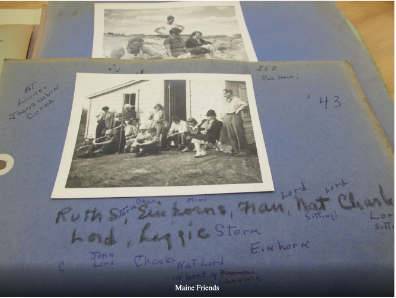
The article argues for an ethics of care for queer audiovisual heritage on digital platforms. Such an approach shifts attention away from archival objects towards relational processes, emphasising accountability to donors, communities, and future users. The article identifies micro archives as key sites of care-based knowledge. Occasionally community-driven and always specialised, these archives have developed practices attuned to trust, situated ethics, and the management of vulnerability. At the same time, the growing collaboration between micro-archives and national heritage institutions introduces new tensions around the translation of care into larger institutional frameworks. For its examples, the article draws on long-term collaborations with the Swedish National Film Archives, the Swedish Archive for Queer Moving Images, bildwechsel in Hamburg, and the Lesbian Home Movie Project in Maine. It is structured in three parts: an analysis of queer heritage recognition in Swedish national film archives, case studies of care practices in micro archives, and a discussion of what is gained and lost when care-driven archival practices move across institutional scales.
Downloads
Published
How to Cite
Issue
Section
License
Copyright (c) 2025 Apparatus. Film, Media and Digital Cultures of Central and Eastern Europe

This work is licensed under a Creative Commons Attribution 4.0 International License.
The articles in Apparatus are published under https://creativecommons.org/licenses/by/4.0/ This license does not apply to the media referenced, which are subject to the individual rights owner's terms.
The authors hold the copyright without restrictions and retain publishing rights without restrictions.